Free card games, properly explained
Thirty classic games you can play immediately in a browser — and, next to each one, a written guide good enough to actually learn the game from.
Most places that host free card games treat the rules as an afterthought: a bulleted list, four lines long, assuming you already know how to play. That has always seemed backwards. The games on this site are old — Cribbage is nearly four centuries old, Backgammon considerably older — and they are interesting partly because of how they work and where they came from. So every game here gets a real page: the complete rules written so a beginner can learn from them, the tactics that separate a decent player from a bad one, the regional variants worth knowing, and an honest account of the game’s history.
The games themselves are free, run in the browser, and need no account, no download and no plugin. They work on a phone. There is no sign-up wall, no timer counting down to a paywall, and nothing to install.
The collection leans towards the classics rather than novelties: the seven patience games worth playing, the five great trick-taking games, the rummy family, a handful of two-player games, the board games everyone half-knows, and three solo puzzles. If you know what you want, the categories below will get you there. If you don’t, start with FreeCell — nearly every deal is winnable, which makes it the best introduction to thinking properly about a card game.
Browse by family
Seven categories, thirty games. Each category page explains what actually defines that family of games and which one to learn first.
Solitaire games
Seven patience games, from the Klondike everyone knows to the two-deck monsters.
-
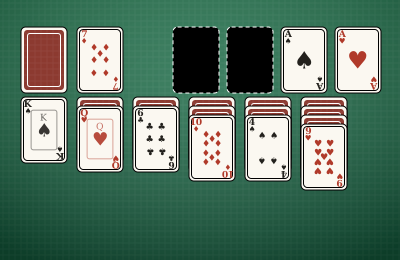
Klondike Solitaire
Seven columns, alternating colours, and a stock you turn one or three at a time.
Play & read the rules → -
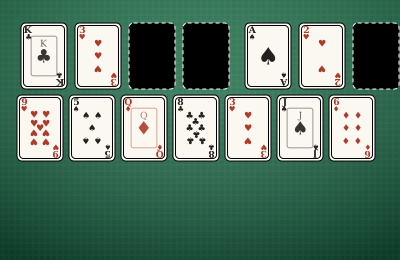
FreeCell
Every card face up and four free cells. Nearly every deal can be won.
Play & read the rules → -
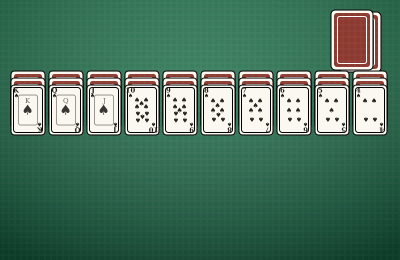
Spider
Two decks and ten columns, in one, two or four suits.
Play & read the rules → -
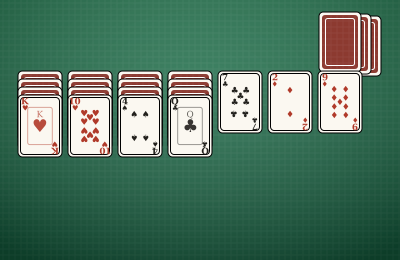
Scorpion
Move any face-up card and everything stacked on top of it.
Play & read the rules → -
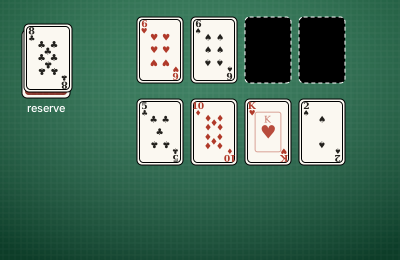
Canfield
A thirteen-card reserve and a moving base rank. Genuinely hard.
Play & read the rules → -
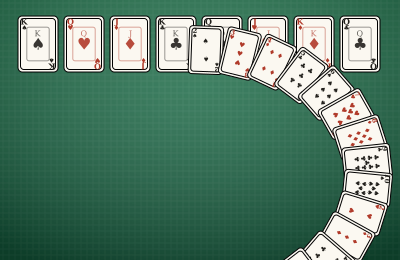
Crescent
Two decks across sixteen piles, with a limited number of shuffles.
Play & read the rules → -
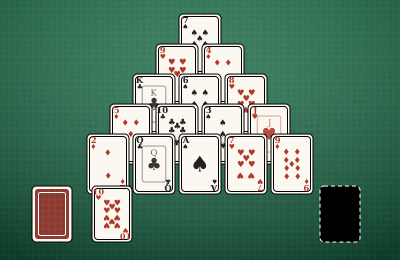
Pyramid
Pair cards that add to thirteen and dismantle the pyramid.
Play & read the rules →
Trick-taking games
One card each, highest wins. The family that contains nearly every serious card game.
-
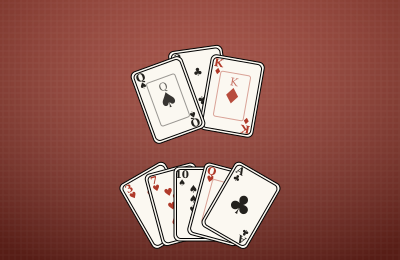
Hearts
Avoid the hearts and the Queen of Spades — or take every one of them.
Play & read the rules → -
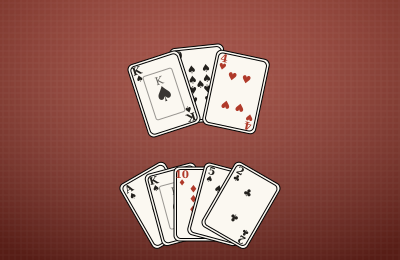
Spades
Bid the tricks you will win with your partner, then deliver exactly that.
Play & read the rules → -
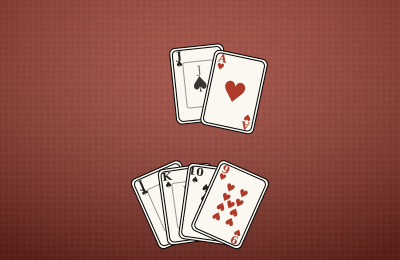
Euchre
24 cards, five tricks, and two jacks that outrank the aces.
Play & read the rules → -
Bridge
An auction, a contract, and one hand played face up.
Play & read the rules → -
Pinochle
Score your melds, then play tricks where the tens beat the kings.
Play & read the rules →
Rummy games
Draw, discard, and sort your hand into sets and runs before anyone else finishes.
-
Rummy
Meld sets and runs, lay off on anyone’s melds, and empty your hand.
Play & read the rules → -
Gin Rummy
Two players, ten cards, and the question of when to knock.
Play & read the rules → -
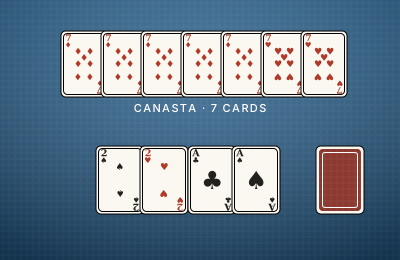
Canasta
Two decks and a partner. Build a seven-card canasta to go out.
Play & read the rules → -
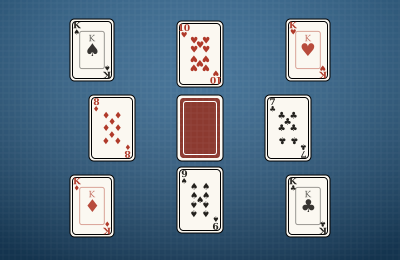
Kings in the Corner
A cross of piles, kings in the corners, and no melds to memorise.
Play & read the rules →
Shedding games
Nothing to collect and nothing to score — just get rid of your cards first.
-
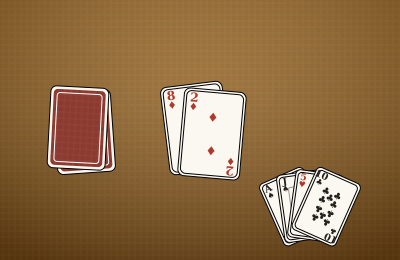
Switch
Match by suit or rank and fire off power cards. Also called Jack Changes.
Play & read the rules → -
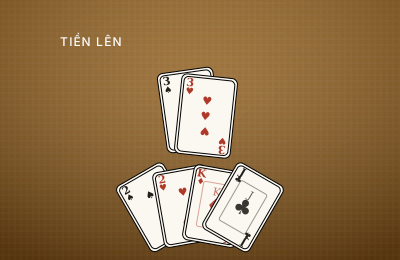
Thirteen
Tiến lên — beat the last play with something higher, and hold your twos.
Play & read the rules → -
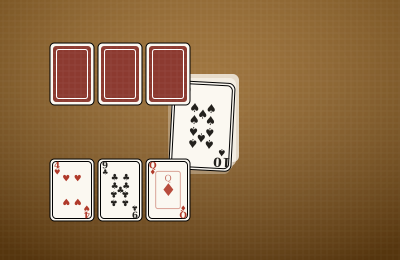
Idiot
Equal or higher onto the pile, with three cards you must play blind.
Play & read the rules →
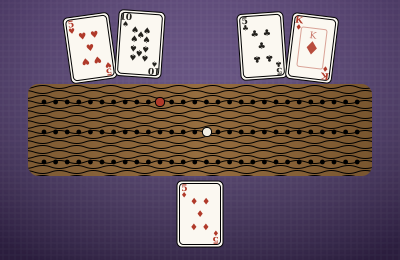
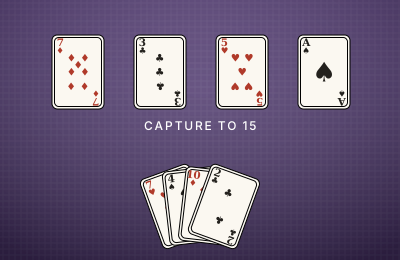
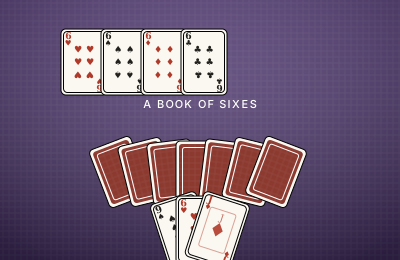
Two-player games
Built for exactly two, with nowhere for a bad decision to hide.
Board & tile games
No hidden information. If you lose, your opponent simply saw further.
-
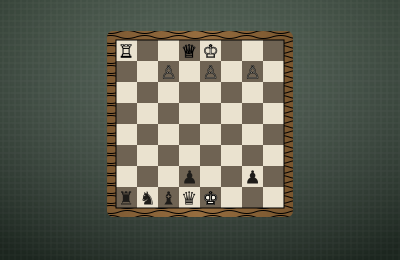
Chess
Three difficulty levels, and the full rules including castling and promotion.
Play & read the rules → -
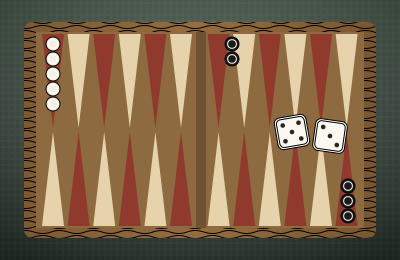
Backgammon
Roll, race, hit your opponent’s blots, and bear off first.
Play & read the rules → -
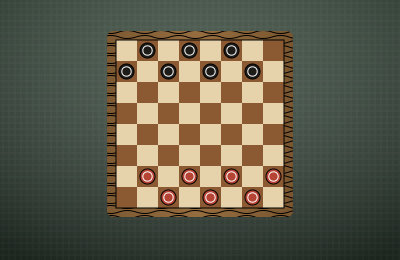
Checkers
Compulsory captures and crowning kings on an old-school board.
Play & read the rules → -
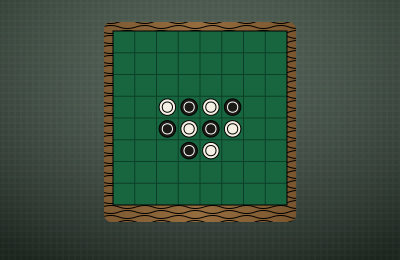
Reversi
Flip your opponent’s discs and take the corners. Also called Othello.
Play & read the rules → -
Mahjong
Match free pairs of tiles and clear the layout.
Play & read the rules →
Puzzles & dice
Three solo games — two of pure logic, one of pure nerve.